Diabetic Care Clinic
In humans, diabetics regularly measure their blood glucose and administer varying doses of insulin depending on their needs. In animals this is not practical or reliable. Instead, we rely on a predictable lifestyle to give a regular, set dose of insulin.
This is not foolproof however, and it is essential that diabetics have regular monitoring to ensure that their diabetes is not over- or under-controlled. Close monitoring is essential during the first few months of treatment, and after any dose changes, however checks may only be needed every 3-6 months once patients are stable.
What happens during a diabetes clinic?
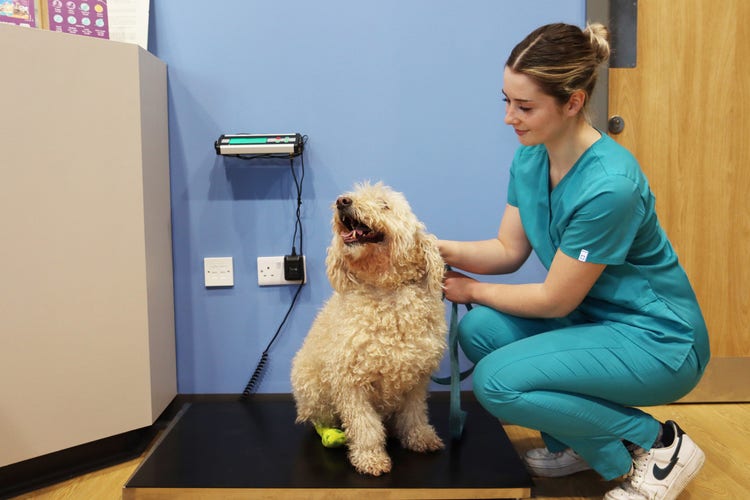
Diabetic clinics are run by trained registered veterinary nurses (RVNs) and are an ideal way of monitoring care. For newly diagnosed cases, the clinic nurse can discuss any aspects of management that you would like to revisit, such as proper insulin storage and injection technique, or go through the cause and general management of diabetes. Depending on the case, the clinic may involve measuring body weight, discussing water intake (you may be asked to record this at home) and appetite, analysing levels of glucose in the urine, or taking blood samples. These measurements can reassure us that the diabetes is well-controlled or highlight early warning signs of a problem. The nurse will also ask you about your pet’s activity levels, any signs of hypoglycaemia (low blood sugar), or other changes at home.
Recently, continuous glucose monitors have become more widely available in the UK. These monitors are fitted to the skin and record glucose levels every minute for up to two weeks, which can then be viewed using an electronic reader or a mobile phone app. The device is placed with the animal awake or under light sedation. It is quick to perform, though pets are usually kept in the clinic for a couple of hours while the monitor calibrates, and the readings are checked against a blood sample. Many nurse-led diabetic clinics offer placement and removal of continuous monitoring devices; however, this must be deemed suitable by your pet’s vet first.