Tooth root abscesses in dogs
An abscess is a collection of pus in one space due to infection. A tooth root abscess (also known as a periapical abscess) is when an abscess develops at the tip of a tooth root, deep within the jaw. They are often very painful due to the build-up of pressure. If they are not treated, the abscess can burst causing an open wound.
Common symptoms of a tooth root abscess in dogs:
Tooth root abscesses cause pain around the affected tooth. You may notice any of the following signs:
- Reluctance to eat
- Only chewing on one side of the mouth
- Drooling more than normal
- Pawing or rubbing at the face
- Bleeding from the mouth or on toys
- A bad smell
- Swollen face
The upper cheek teeth are most often affected, and dogs often have swelling of their face around the upper jaw, under the eye. This can be widespread swelling or a well-defined lump.
What causes tooth root abscesses
Tooth root abscesses are caused by bacteria penetrating the bone and tissues around the tooth root. Bacteria can get there through two routes:
- Through the tooth: If there is damage to the hard enamel coating the tooth, such as a chip or fracture, it allows bacteria to penetrate the softer inner layers of the tooth. Teeth all have a soft pulp cavity in the centre, and if bacteria enter this, they can travel straight to the tooth root.
- Around the tooth: In cases with chronic dental disease, the ligaments around the teeth become weak and tiny pockets develop between the tooth and the surrounding gum. This allows bacteria from the mouth to penetrate around the tooth to the root.
Not all teeth with fractures or dental disease will develop tooth root abscesses, and there are no clear reasons why some dogs develop abscesses when others don’t.
Treatment options
Tooth root abscesses are treated by removal of the infected tooth. Depending on your dog’s symptoms, and when a dental procedure can be scheduled, your vet may recommend treatment with antibiotics and anti-inflammatories initially. These can make a dramatic difference in symptoms, however, is it rare that they will completely eliminate infection. Generally, once treatment stops, the abscess will return if the problematic tooth is not dealt with.
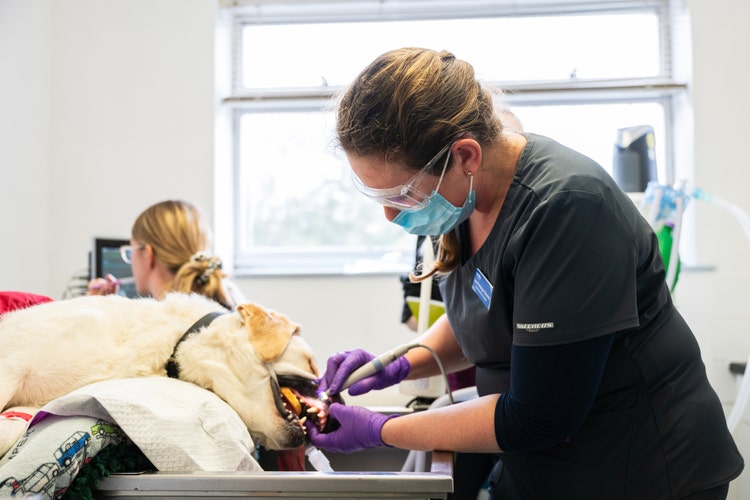
If the vet suspects a tooth root abscess, they will recommend a dental procedure. This is performed under anaesthetic, which allows the vet to thoroughly examine the mouth. Sometimes, a damaged tooth is obvious. Sometimes it is not clear which tooth is the culprit, in which case an x-ray may be taken to look at the tooth roots directly. Often, if one tooth is diseased or damaged enough to cause a tooth root abscess, the other teeth are not perfect either. During the dental procedure the vet or nurse will clean and examine all other teeth. It may be that other teeth are identified as diseased, in which case it will be recommended to remove them before they also develop abscesses.
Once the affected tooth has been removed, most dogs will not need antibiotics. This is because the infection was trapped behind the tooth but is now able to drain and the body can fight it off. The prognosis after dental treatment for a tooth root abscess is excellent.
Tooth root abscesses occur when bacteria penetrate the tooth root, either through damaged teeth or due to dental disease. They don’t resolve on their own, so if you see signs that your dog has pain in their mouth or a swelling on their face, it is important to seek veterinary attention for appropriate treatment
How you prevent another tooth root abscess will depend on why it happened. If the abscess developed due to a fractured or chipped tooth, we recommend preventing your dog chewing hard items like stones, bone or antler, as these are common causes of tooth damage.
If your dog developed an abscess due to periodontal disease, this should be much improved after a dental procedure. Home care such as tooth brushing, dental chews and oral rinses can all help look after the teeth and reduce the risk of dental disease developing again. The most important action is regular checks with a vet or nurse, every 6-12 months, to monitor the teeth. If dental disease is seen, it is recommended to have a scale and polish procedure to try and prevent permanent damage to the teeth.