Periodontal disease (gingivitis & periodontitis) in dogs
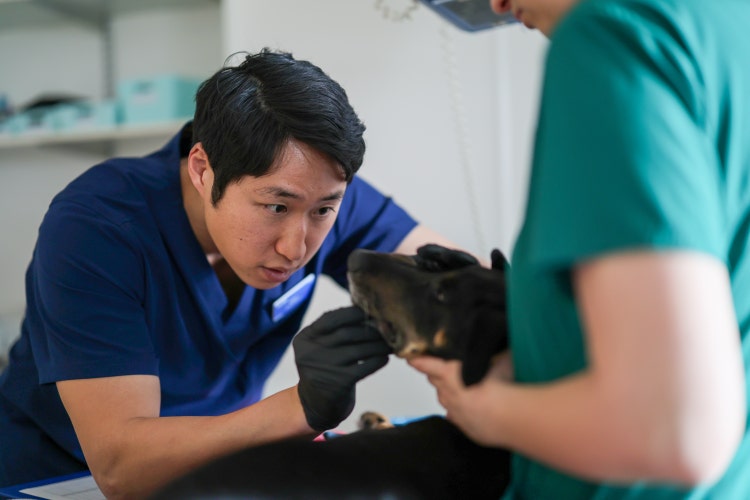
Periodontal disease is the proper name for dental disease. It is the most common condition seen in dogs and affects up to 90% of dogs over three years old. In the early stages there can be little to no visible changes in the mouth, but over time periodontal disease progresses. Untreated, it results in severe, painful disease.
Periodontal disease can affect any dog of any age, but the older your dog gets the more likely they are to have it. Some breeds are more prone to the condition, especially toy breeds and greyhounds, who tend to have more severe disease and at a younger age.
Symptoms to watch out for
In the early stages of periodontal disease, you may not notice any symptoms. If your dog lets you look in their mouth, you may see that the gums are looking red or sore, or that brown staining or deposits can be seen on the teeth. If you are not confident looking in your dog’s mouth, your vaccination or six-month health check appointments are a great time for a vet or nurse to check for you.
As periodontal disease progresses, your dog will become uncomfortable. They are very good at hiding pain, but you may notice:
- A bad smell from the mouth
- Eating less, or more slowly
- Dropping food out of their mouth
- Increased salivation (drooling)
- Avoiding chew or tug toys
- Eating on one side of the mouth
- Rubbing or pawing at the face
- Bleeding from the mouth
- Swelling of the face
Some of these signs can be caused by other problems, but dogs with sore mouths can be very reluctant to let anyone have a look so if you have any concerns always get your dog checked by a vet
The causes of periodontal disease in dogs
Periodontal disease is a progressive condition. There are no specific causes, and it will affect almost every dog at some point in their life. In the early stages teeth become covered in plaque; a sticky layer of bacteria and microscopic food particles. Plaque isn’t visible to the naked eye, but is what makes your teeth feel fuzzy in the morning before brushing. Because plaque traps bacteria against the teeth, it is only a matter of time before more significant changes develop.
1. Tartar
As the layer of plaque gets thicker it traps minerals from food and saliva. This creates a visible brown substance called tartar. Over time, tartar builds up as a thick crusty layer on top of the teeth, making a perfect breeding ground for bacteria underneath.
2. Gingivitis
Next, the gums become red and inflamed, known as gingivitis. This is painful but can be reversed if tartar and plaque are removed. If left, the gum edges will start lifting away from the tooth, creating pockets for bacteria to move deeper into. These release enzymes and toxins that damage tissue further.
3. Periodontitis
The last stage of periodontal disease is periodontitis, meaning inflammation of the tissues, ligaments and bone around the teeth. The gums continue to lift away but also retract, exposing the tooth roots. The ligaments supporting the teeth are weakened, allowing the teeth to move around in the sockets. Tartar continues to develop, trapping pockets of infection around the diseased teeth. Sometimes, tooth root abscesses will form.
We know that up to 90% of dogs over the age of three have periodontal disease, but many will only have plaque or tartar. The likelihood of this becoming gingivitis or periodontitis increases as your dog gets older.
Preventing and treating gingivitis
Not every dog with gingivitis will develop periodontitis. This means that there is an opportunity for intervention and treatment. There are several ways you can help prevent gingivitis and periodontitis:
- Regular tooth brushing – physical abrasion from a toothbrush will dislodge plaque and can help delay or prevent it turning into tartar and causing gingivitis. Always use dog toothpaste (which doesn’t contain fluoride) and start slowly while your dog gets used to the sensation of brushing. Daily brushing is ideal but doing it less often is still better than never.
- Diet – feeding dry biscuits can help reduce tartar formation as the crunching action scrapes the teeth, similar to brushing. This applies to any dry food, but you can get specific dental diets where the size and texture of the kibble is specially designed for maximum effect. Dental chews work on a similar principle but are treats so be mindful about over-feeding and weight gain.
- Dental toys – these are toys designed to be more abrasive against the teeth. They are best for dogs who like to chew, and are a much safer alternative to bones, antlers or rawhide.
- Regular dental checks – it can be hard to examine a dog’s mouth as they often don’t like to sit still or won’t allow a good look. Regular dental checks with a vet or nurse are ideal as our trained staff can assess for the presence of dental disease and make a personal recommendation for management or prevention.
Once tartar is present and gingivitis is developing, it can be almost impossible to reverse this at home. The best treatment at this stage is a scale and polish procedure. This is performed under anaesthesia and allows the full surface of every tooth to be cleaned with an ultrasonic scaler and examined for periodontitis. Since gingivitis alone is reversible, dogs who receive regular scale and polishes may never progress to periodontitis.
Summary
Periodontal disease is a broad term for all dental disease affecting dogs. It starts with development of plaque and tartar on the teeth, before progressing to inflammation of the gums (gingivitis) and deep structures around the teeth (periodontitis). Untreated, periodontal disease causes chronic pain and can result in the loss of teeth.
Dogs are very good at putting up with chronic pain, but if you notice smelly breath, brown teeth, inflammation or bleeding in the mouth, reduced or slow eating, or any signs of discomfort, you should have your dog’s mouth checked by a vet. Dental disease is the most common condition we see in dogs but is also one of the most treatable.