Kitten teething: Timeline, symptoms and relief
As your kitten grows, they will gradually lose their baby teeth in place of permanent adult teeth. Most owners are delighted to wave goodbye to the sharp little teeth, especially when your kitten has been using them to exercise their natural hunting instincts, but teething can make biting behaviour worse before it gets better. Teething is a completely normal part of kitten growth, but there are definitely things you can do to make the process a little less stressful.
Teething timeline
A kitten’s first teeth start to emerge from just ten days old, and by a month of age have all erupted. These are temporary teeth, known as deciduous or baby teeth. Kittens have 26 deciduous teeth, which are replaced and joined by four more at the very back of the mouth to make 30 adult teeth.
At 3.5 months of age the permanent, adult teeth start to appear, replacing the baby teeth. The roots of the baby teeth gradually dissolve allowing them to fall out; this can happen before or after the adult tooth emerges. The incisors (small teeth at the front of the mouth) are replaced first, followed by the molars appearing at the back of the mouth. The canine (fang) teeth usually emerge around 5 months of age, and the full set of adult teeth should be present by 6 months.
Common signs that your kitten has started teething
As the adult teeth start to emerge, the gums often feel itchy and sore. Chewing can alleviate some of the itch so often one of the first signs that your kitten is teething is a new passion for chewing things. Unlike puppies who destroy items, kittens are more likely to chew as part of general play, so for some very active kittens you may not notice a difference! You may occasionally notice a bit of blood on a chewed item if a baby tooth has been knocked out, but this is generally only very mild and stops on its own.
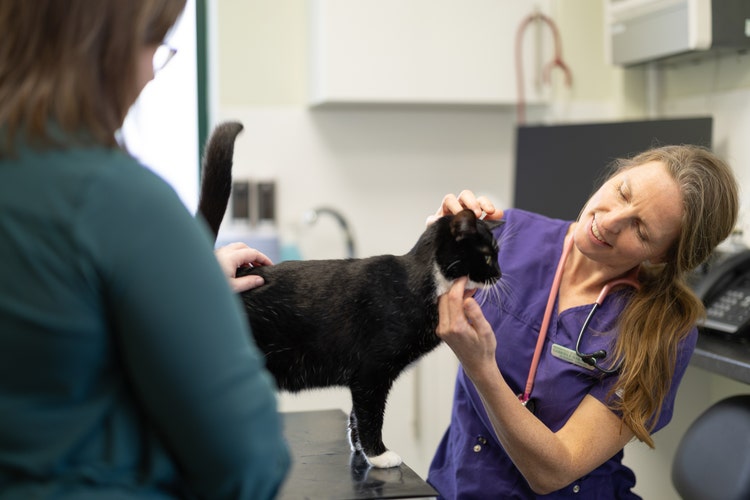
Most kittens will be happy to keep eating as normal while they are teething and aren’t usually unwell in themselves. Some may feel a little sore so can eat more slowly or seem to become picky. If they let you look in their mouth (a good skill to practice!) you may notice a gap in the gums or see the tip of an adult tooth poking through.

How to help your kitten
The most important way to help your kitten during teething is to make sure they aren’t able to chew anything harmful. Generally good practice when you have a kitten anyway, we would recommend you make sure wires and cables are out of reach and that any accessible houseplants are not toxic to cats. Remember, lilies are very toxic so should never be in the same house as a cat.
While your kitten is teething, you can offer a variety of toys so they can choose a texture they like. You can get specially designed freezable toys to soothe the gums, but any toy that encourages your kitten to chase, pounce and bite is likely to help direct any chewing instincts in the right direction. Try not to pull toys out of their mouth though, as this can damage the fragile baby teeth.
Try not to punish your kitten for chewing the wrong thing (including your hands or feet!); instead remove them and offer a suitable toy instead. If you know they are likely to try and bite things they shouldn’t, don’t leave them unattended around anything valuable or harmful if chewed.
Summary
Teething is a normal part of kitten development but can be uncomfortable for your cat. Directing them to appropriate toys for biting and chewing can make the process less painful for everyone. Most kittens don’t need veterinary attention during teething, and the process will finish naturally between 5-6 months of age.