Dental Disease In Cats: A Dentistry Expert's Guide

Oral health is a crucial, but often overlooked aspect of your cat's overall wellbeing. Just like humans, cats can experience a range of dental problems, which, if left untreated, can lead to more serious health complications. In this article, we take you through the different types of dental disease, the symptoms to look out for, as well as the treatments available and what you can do at home to protect your cat’s teeth.
To bring you the most fascinating insights into feline dental health, we've turned to Dr. Jose Carlos Almansa Ruiz, a recognised expert in the field of veterinary dentistry.
Despite their cosy lap-cat image, domestic cats retain a remarkable feature from their wild ancestors – a set of razor-sharp teeth. These teeth are a vestige of their past as skilled hunters, and though their current lifestyle is far less predatory, their dental architecture remains an essential part of their anatomy.
- Adult cats have 30 teeth (16 on top, 14 on bottom), while kittens have 26 baby teeth
- Kittens start to lose their baby teeth around 12 weeks, with adult teeth appearing soon after
- The cat's small front teeth (incisors) are mainly used for grooming and removing old nail casings
- Four of the upper teeth in your cat's mouth (upper 2nd premolar and 1st molar teeth) are vestigial teeth and do not play a role in grooming or eating
- Cats often hide pain, making dental problems hard to detect without proactive monitoring
- The likelihood of developing periodontal disease significantly increases with age in cats
When inspecting your cat's teeth, you should notice they are clean and bright white, without any signs of chipping or damage. When it comes to their gums, a healthy appearance is key. They should present a smooth, pink surface, free from any sores or lesions. It's also crucial that there's no evidence of redness, swelling, or bleeding – these can be tell-tale signs of underlying health issues. Keeping an eye on these details can help ensure your cat's oral health remains in top condition.
It is also important to understand the relationship between your cat's upper and lower teeth; your cat should be able to close their mouth without any contact between the teeth, or between the teeth and the soft tissues of the mouth. If the upper and lower jaws do not fit together properly, it is known as malocclusion. This is seen more commonly in brachycephalic cat breeds (those with short faces), such as Persians and British Shorthair cats. You can find helpful tips for checking your cat's teeth in this YouTube video by the PDSA.
Cats often hide their pain, making it challenging to spot dental issues. However, certain signs can alert you to potential problems. In this section, we'll highlight key symptoms to watch for, helping you catch dental issues early and keep your cat's oral health on track. Some common symptoms that suggest dental disease are:
- Eating less than normal
- Eating more slowly than normal
- Dropping food out of their mouth or around the bowl
- Hissing or growling at the food bowl
- Pawing at the face
- Making funny faces when eating
- Bad breath (often a fishy smell)
- Reduced grooming/dishevelled appearance
- Weight loss
Dental disease is alarmingly common in cats, with research from the Cornell University Feline Health Centre indicating that 50-90% of cats over four years old experience some form of dental illness. This startling statistic underscores the importance of being aware of the most common oral health issues facing our feline friends.
The top dental problems frequently observed in cats across our veterinary practices are:
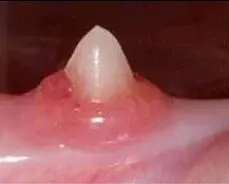
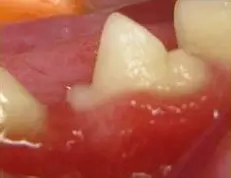
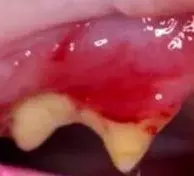
- Periodontal disease
- Gingivostomatitis
- Tooth resorption
- Fractured teeth
- Malocclusion
- Oral tumours
Periodontal disease
Gingivostomatitis
Tooth resorption
Fractured teeth
Malocclusion
Tumours of the oral cavity of cats represent around 10% of all tumours diagnosed in all parts of the body. In cats, the most common tumour diagnosed in the oral cavity is called Squamous Cell Carcinoma. This tumour is most commonly found under the tongue, meaning they can remain hidden until they are very advanced. Oral tumours often have similar symptoms to dental disease, such as reduced appetite, smelly breath and bleeding from the mouth. There are several predisposing factors for cats to develop this type of tumour, such as eating poor-quality commercial diets or wearing flea collars. Living in households where people smoke can also cause oral tumours, as tobacco smoke adheres to the cat’s coat and is transferred to the tissues inside the mouth during grooming.
Thankfully, with the right dental care and regular monitoring, the most prevalent types of these dental diseases can either be prevented or effectively managed.
What are the risk factors?
Risk factors you can control:
- Lack of regular dental care (such as tooth brushing)
- Diet consisting of mainly soft food
- Viruses such as calicivirus, herpesvirus and FeLV, that can be prevented by vaccination
Risk factors you can’t control:
- Age
- Genetics
Clinical Exam
The initial step in diagnosing dental disease is a clinical examination by a veterinarian or veterinary nurse. They can identify signs of dental disease and its severity during this exam.
The presence of dental disease can be seen on a clinical exam by a vet or nurse, and we can often judge whether it is mild, moderate or severe. A complete mouth assessment can only be performed under general anaesthetic though, even in a very well-behaved patient.
Complete Mouth Assessment
Effective treatment of dental disease in cats is crucial for alleviating discomfort and preventing further health complications.
Home Care for Mild Cases: Cats with mild dental disease, characterized by little or no tartar, can often be managed with diligent home care, including regular teeth brushing to slow down the progression of the disease.
Dental Procedures for Moderate Cases: Cats with moderate tartar buildup or mild Gingivitis usually require a dental procedure to resolve these issues and prevent them from worsening. This procedure is typically recommended within three months of the initial examination. Following the procedure, ongoing home care is essential to delay the recurrence of dental disease.
Immediate Procedures for Severe Cases: In cases of Periodontitis, which indicates severe dental disease, an immediate dental procedure is advised. Periodontitis is a painful condition, and if left untreated, there's a risk of infection spreading from the mouth to other parts of the body.
If the vet or nurse advises your cat would benefit from a dental procedure, there is a good chance that ignoring this will cause worsening of the dental disease and potential discomfort for your cat. This means that when the procedure is eventually performed it will be more complex, probably taking longer and costing more. There is a greater chance that more teeth will require extraction. By acting early, we have a much better chance of restoring oral health and preserving teeth.
Dental procedures in cats are always performed under anaesthetic, as it is simply not possible to do a thorough clean with pets awake. Although no anaesthetic is completely risk-free, we use personalised drug protocols for each individual patient, along with experienced staff and high-spec monitoring equipment to make the procedure as safe as possible. If you have specific concerns about your pet having a dental procedure, please speak to a member of the team; we are happy to answer any questions you may have.
Regular tooth brushing
Regular oral health check-ups
Ideally, we want to identify dental disease in the earliest stages so that we have the best chance of intervening, keeping the mouth healthy and preserving the teeth. Spotting the first signs of dental disease is best done by a trained professional, during regular checkups with a vet or nurse. These should happen every 6 months, or sooner if you have concerns.
You should also try to open and look at your cat’s mouth once a week. Check for bad smells (especially if this is worse than normal), broken teeth, and redness of the gums. Even if you aren't confident looking at the teeth, doing this regularly will get your cat used to having their mouth examined. This means the vet or nurse is more likely to be able to have a good look in the clinic, without your cat being worried about what is happening.
Diet
Cats that are fed dry biscuit diets tend to have less tartar than those fed only on wet food. This is because the mechanical action of crunching biscuits helps reduce plaque build-up. It does however rely on cats chewing the biscuits and not just swallowing them whole! Prescription dental care diets are available that can further reduce tartar formation; look for one that is proven to work or ask your practice for a recommendation.
Products
Various oral rinses and gels are available, most containing chlorhexidine to reduce bacteria and plaque. Many are effective, however, there are also many ineffective products available online; look for products with the VOHC (Veterinary Oral Health Council) seal or the list on their website.
Veterinary care
Following the advice on this page will help to keep your cat’s mouth as healthy as possible. If all the preventative measures are used, this will dramatically slow down tartar formation. Unfortunately, however, nothing will prevent dental disease completely. Some pathologies, such as tooth resorption, cannot be prevented as we still do not know what triggers them.
It is recommended that every cat has regular checks with a vet or veterinary nurse to allow a complete oral health assessment and treatment plan (known as COHAT). A conscious examination of the mouth is usually possible in a well-behaved cat. However, this only allows identification of superficial problems. Just like a floating iceberg, only the tip is visible, but the majority of the tooth is hidden within the jaw.
The gold standard COHAT requires the cat to have an anaesthetic, during which a full oral examination is carried out. The amount of tartar is recorded, along with the degree of gum disease present, signs of tooth resorption and any damaged or fractured teeth. The mouth is checked for changes such as infection or growths on the gums. The teeth are cleaned using an ultrasonic scaler before a fine probe is used to explore the edges of each tooth, identifying gingival pockets, root exposure, resorptive lesions or mobile teeth. Cats have 30 teeth, so it can take some time to fully assess the whole mouth.
Summary
References
O’Neill DG, Blenkarn A, Brodbelt DC, Church DB, Freeman A. Periodontal disease in cats under primary veterinary care in the UK: frequency and risk factors. Journal of Feline Medicine and Surgery. 2023;25(3). doi:10.1177/1098612X231158154
Perry R, Tutt C. Periodontal disease in cats: Back to basics – with an eye on the future. Journal of Feline Medicine and Surgery. 2015;17(1):45-65. doi:10.1177/1098612X14560099