Cat tooth resorption
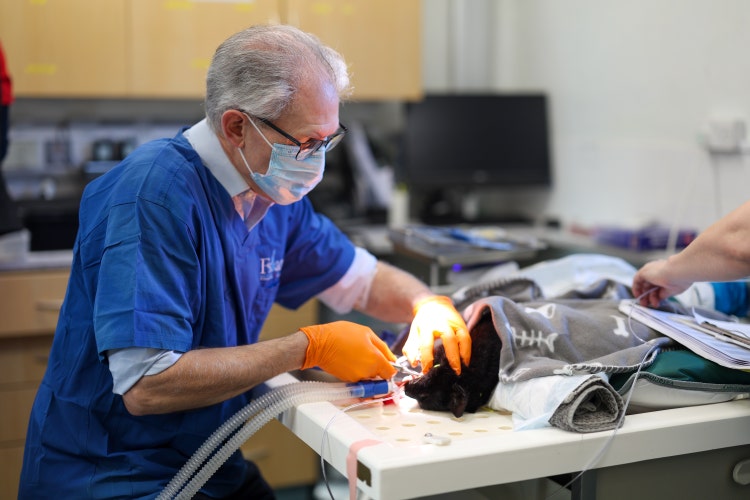
Tooth resorption is one of the most common types of dental disease seen in cats. Resorption is the term used when the body breaks down and absorbs existing tissue. Tooth resorption is when the hard tissues of the teeth, such as enamel, are broken down and absorbed by the body. Surrounding bone can also be affected.
Tooth resorption is estimated to affect 20-60% of domestic cats. It is more common in cats five years of age or older but can affect cats of any age.
Tooth resorption is often painful as the dental nerve is exposed. A significant number of cases of tooth resorption in cats affect only the root, so are not visible on examination. Resorption of the tooth roots can only be identified on dental x-rays.
Signs of tooth resorption
In the early stages, tooth resorption may have no symptoms. Once inflammation progresses, the dental nerve is exposed, or bacteria from the mouth enter the resorption site, it becomes very painful. Cats with pain due to tooth resorption may:
- Drop food while eating
- Eat more slowly or with the head on one side
- Avoid hard foods
- Hiss or growl at their food
- Paw at the face or make strange jaw movements
- Drooling (hypersalivation)
- Have a dishevelled appearance due to reduced grooming
- Lose weight
It’s important to note that, even with severe dental disease, most cats won’t stop eating entirely.
How is tooth resorption diagnosed?
There are often few signs of tooth resorption on clinical examination. If significant resorption of the tooth roots occurs, the crown (part of the tooth above the surface) may break off. Sometimes, resorptive lesions are visible just above the gum line. These look like small erosions in the tooth containing pink or red, fleshy material.
The best way to diagnose tooth resorption is using dental x-rays. These allow us to look at the full tooth, including roots, within the jawbone. We can identify areas of resorption and even see where entire roots may have dissolved and been replaced by bone. We would ideally take x-rays of every cat having a dental procedure; however, the equipment is not available at every clinic. If your practice does not have dental x-ray facilities, but suspects your cat has resorptive lesions, they may recommend that you are referred elsewhere for treatment.
How is tooth resorption treated?
Tooth resorption is a progressive process. Once resorption has started, it will result in destruction of the entire tooth. There is no way to stop this happening, so the only treatment for tooth resorption in cats is to remove any affected teeth.
Most cats with tooth resorption will have more than one tooth affected, in more than one area of the mouth. Dental x-rays are recommended so that all teeth can be examined, and treatment planned. Removal of affected teeth is typically performed using surgical extraction to ensure all remaining roots are removed.
Summary
Feline resorptive lesions can affect any cat and can be hard to spot by looking in the mouth alone. Untreated, they cause significant pain and tooth loss, so if you notice any signs such as reluctance to eat, drooling, holding the head on one side or hissing at the food, please make an appointment to see your vet