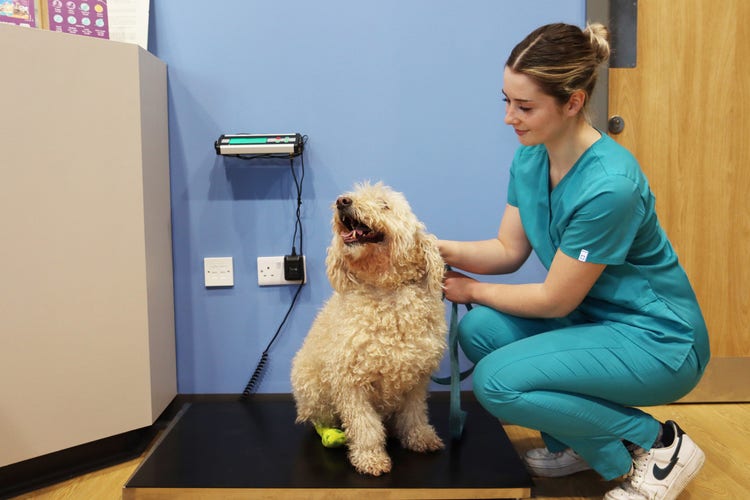
Physiotherapy
Physiotherapy is predominantly based around exercise therapy but often involves other techniques such as massage and passive range of motion movements.
A physiotherapist will assess your pet by observing them moving around, as well as physically examining to feel muscle mass, tone and symmetry. This allows them to identify areas of discomfort, inappropriate posture, or difficulty with movement. A personalised treatment plan can then be implemented to help reduce pain, improve mobility and prevent further injury by increasing muscle mass and tolerance.
How is physiotherapy useful?
Physiotherapy can be used for:
- Recovery after orthopaedic or spinal surgery
- Management of chronic joint conditions (such as hip dysplasia or arthritis)
- Improvement of general fitness or conditioning in athletic dogs
- Helping to manage discomfort from cancers or soft tissue disorders
When performed by a suitably qualified person, physiotherapy is very safe. Some pets may feel stiff or sore afterwards, as we would after a work-out. Depending on your pet’s response to treatment, sessions may be carried out more or less frequently.
What can I expect?
Physiotherapy sessions are usually recommended to take place weekly, with an initial course of 4-8 sessions. The length of each session, and exact number required, will vary depending on what is being treated, how much needs to be achieved, and how your pet responds. Some conditions will be greatly improved and, once the pet is back to normal, physiotherapy can be stopped. Other conditions are chronic, such as arthritis, and regular physiotherapy sessions are recommended indefinitely to maintain muscle condition.
Many insurance policies will cover physiotherapy under a “complementary therapy” claim. Your insurer may want confirmation from your vet that they have recommended this treatment. If in doubt, check your policy or call your insurer directly.