Noise Phobia In Pets
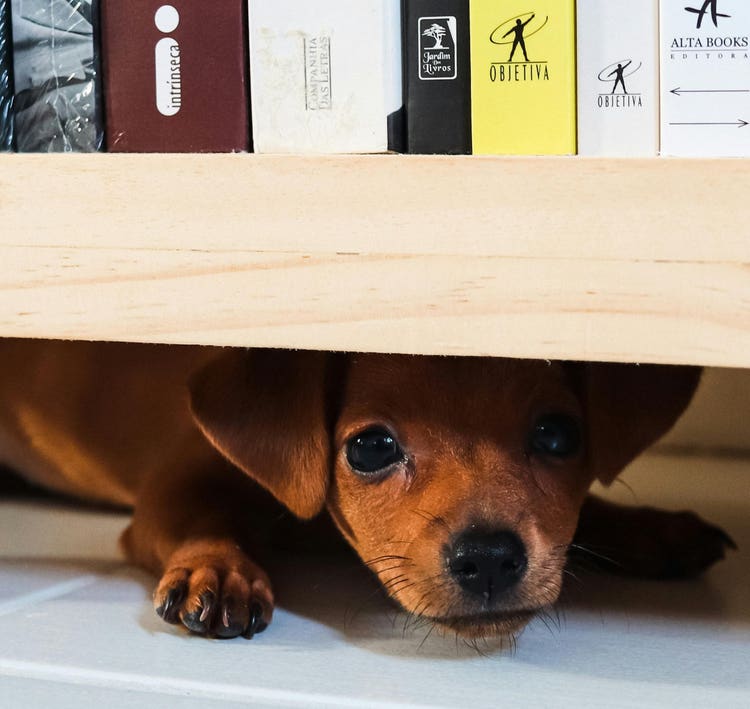
It is natural to have a fear response to sudden, loud noises, and for many animals this is quickly forgotten when the sound stops. For some pets, however, this response is persistent and severe, at which point it is considered a phobia. When the noises happen for several consecutive days, this can cause anxiety due to anticipation of danger.
The most common sounds that pets react to are fireworks, gunshots, thunder, and engine noises. Not only are these sounds often high frequency and loud, but they are sudden isolated sounds or short bursts of noise. This means the auditory system isn’t prepared, so the sound can seem louder than a continuous noise at a louder decibel.
We don’t understand why some animals are more prone to noise phobia, and the majority of pet owners don’t report a previous traumatic experience with noise. Lack of exposure to loud noises during the first few months of life can make dogs more likely to have a fear response, and some breeds are more anxious in general. Dogs are more commonly diagnosed with noise phobia, however, cats tend to hide as a coping mechanism so are probably affected more than we realise.
No studies have found a definitive reason why some dogs become fearful of fireworks while others don’t. Many factors have been suggested, but most studies sample too few animals to make firm conclusions. Some studies suggest reduced incidence of firework phobia in some breeds, such as gun-dogs, in dogs that have had exposure to fireworks or similar loud noises during the first 4 months of life, and in young dogs[1]. Many dogs that are afraid of fireworks are also afraid of other loud noises, such as thunder, however they are not more likely to be anxious dogs in general[1].
Common signs of fear associated with noise in dogs include:
- Trembling or shaking
- Panting or lip-licking
- Salivating excessively
- Restlessness; pacing or being unable to settle
- Hiding
- Barking or trying to gain attention
- Destruction of toys or items
Environmental modifications
Desensitisation and Counter-Conditioning
Desensitisation and counter-conditioning (sometimes referred to as DSCC) is the process of slowly changing the response to loud noises, until they are no longer fear-inducing. This is the gold standard treatment for noise phobia in dogs, and has been used since the 1970s.
Desensitisation involves playing recordings of the trigger noises to gradually acclimatise your dog. It is important to only do this when the dog is feeling positive and confident. Encourage the use of a safe anchor, such as a favourite dog bed that is used for very calm behaviours. Start by playing the sounds very quietly (so they are barely audible) and encourage positive association such as playing or chewing a treat. Once your dog is behaving calmly, with no anxious behaviour, gradually increase the volume of the noise. This is likely to happen gradually over several sessions and shouldn’t be rushed. Ideally, a short period of therapy should take place every day to help normalise the noise.
Desensitisation training is time-intensive, and should start at least 2 months before anticipated problems, such as firework season. Once it has achieved the desired response, improvement in fear response can be maintained for up to a year. For the majority of dogs, ongoing sessions are required to maintain confidence when loud sounds happen.
Prescription Treatments
Many different medications have been described for use in dogs with noise phobias. However, few have been properly studied to demonstrate that they are effective. Medications used include sedatives (such as dexmedetomidine), tranquilizers (such as diazepam), and anti-depressants (such as trazodone). They work by reducing the level of anxiety in the brain, causing feelings of calm. Medications often also cause light sedation. This is helpful to reduce dogs harming themselves. However, it is important that the drugs used also reduce the anxiety felt. Just sedating a dog will give the impression of reduced fear, as they will be less able to physically respond, but doesn’t stop the dog feeling scared. Medication is more appropriate for short-term noise, such as fireworks, than for dogs that are affected by noise phobia during daily life.
These medications are prescription only, so can only be prescribed by a vet that has examined your dog. They must only ever be given following the vets’ instructions. They may be given as one or two doses or prescribed for a longer period.
Behavioural Therapy
Animal behaviour is very complex, and many vets will advise referral to a specially trained clinical animal behaviourist to address the root cause of behaviour concerns. It is important to avoid dog trainers, even if they claim to be able to help with behaviour issues, as using incorrect or outdated techniques can cause behaviour to get worse and cause serious problems for your dog. Your vet will be able to make a recommendation for an appropriate behaviourist, or even refer your directly. If in doubt, look for a veterinary clinical behaviourist that is a member of one of the following organisations;
Alternative Therapies
If your dog shows relatively mild signs of fear, your vet may recommend trying non-prescription treatments first. These are often called alternative therapies.
Calming pheromones such as Adaptil© can be used as sprays or plug-in diffusers in the area your dog spends most time. Adaptil© contains a pheromone that is released by mother dogs to soothe puppies, and which can still have a calming effect on older dogs. The diffuser lasts for 4 weeks but should ideally be used for a couple of weeks before fireworks start.
Anti-anxiety supplements are also known as nutraceuticals. They are natural products that contain substances thought to reduce fear and anxiety, but that have not been clinically proven. Common ingredients include B vitamins and amino acids (such as L-tryptophan, the compound in turkey that makes us feel sleepy after eating it!). Various brands are available such as Zylkene© and YuMOVE© calming supplement.
Herbal treatments include Pet Remedy© (spray or diffuser) and Bach Rescue Remedy© Pet drops, which are alcohol free and can be given with food or in water (always offer plain water as well).
Anti-anxiety wraps, such as Thundershirt©, apply gentle pressure around your dog’s body. This can have a calming effect, similar to swaddling a baby. Pets should not be left unattended while wearing anti-anxiety wraps.
Fear of sudden, loud noises is a natural response. However, for many dogs, this escalates into anxiety and intense fear. As many as 50% of dogs will show some signs of being afraid of fireworks, and this tends to get worse year on year. Being attentive and spotting the first signs of distress enable us to intervene and reduce the distress our pets may experience.
For many pets, simple environmental changes like having the TV on loud and creating a safe den can be enough to instil a sense of calm during periods of loud noise. At-home and over-the-counter treatments such as pheromone diffusers and nutraceuticals can also help. For some dogs, their fear is too intense for this to be enough, in which case counter-conditioning and noise desensitisation can be used to try and reprogram their responses. Additional support from your vet or an accredited clinical behaviourist may be needed.